Beating Broke

Personal Finance from the Broke Perspective

  • Home
  • About
  • We Recommend
  • Contact
  • Privacy Policy

Powered by Genesis

The Scales of Finance

May 11, 2011 By Shane Ede 1 Comment

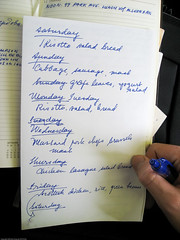
IMG_2394Not to be confused with the scales that our friend Lady Justice carries around with her everywhere, the scales of finance are a bit different in function.  To truly weigh something, using a scale, you load up one side of the scale with that which you want to weigh and then put weights of a known mass on the other side.  When the scale is balanced, you count up the known mass weights and you’ve got the weight of the item(s) on the other side.  Lady Justice, as the story goes, does this by weighing a persons crimes and adding the appropriate amount of punishment to the other side so that the Scales of Justice balance.

When we think about personal finance, there are those that are die-hard frugalers.  There is no other way to save money, retire comfortably, or live, than by being frugal.  The more frugal you are, the more you save, and the less you spend.  Coupons are their best friends, as are black friday deals and places like farmers markets and flea markets.

There are also those that are the die-hard incomers.  Skipping a latte isn’t for them.  The only way to get ahead is to make more money while not spending any more.  They’ll work three jobs to achieve levels of income that were previously unheard of and use that added income to pay off debt and save for retirement.

But, much like justice, the scale can pretty easily be tipped into unbalance.  Frugaling, while a good idea, can only take you so far.  Income increasing can only take you so far.  Eventually, you’ll need to make a bit more money, or work less.  The right way to do it is to strike a balance between the two.  Cut your costs as much as you can, without going to extremes.  Increase your income as much as you can, without going to extremes.  Find a place where you can balance your financial life while still getting to live life and not be classified as a cheapskate work-a-holic.


Balancing the Scales of Finance

  • Create a budget. Know where your money is going (even if it’s going down the drain), and plan where you want it to go.
  • Cut costs. A little bit of frugal living isn’t going to hurt you.  Drop cable T.V.  You can replace it with Netflix, or books.  Find other things that you can do without completely or cut usage of.
  • Analyze your finances. Use your budget to determine the inflow/outflow of your finances.  How long to payoff your debts?  Could it be accelerated greatly by taking on a second job?  Maybe you only need a second job for 6 months to pay off a credit card.
  • Increase your income. There are other ways, besides taking on extra jobs, to increase your income.  Prepare for, and then ask for a raise.  Sell off stuff you no longer use.  Find a way to get paid for hobbies you already do.
  • Don’t over-do it. Maintain focus on your end goal, but keep your sacrifices to a bearable level.  All that extra income won’t do you any good if you burn out in 3 months because you’ve been working 80 hour weeks.  And all the frugal in the world won’t do you any good if you burn out in 3 months because you’ve been manually separating the plys on your TP.

Don’t think that just because you do all of this once, that you’ll remain in balance forever either.  At first, you will probably benefit from regular weekly or bi-weekly check-ups.  As you get more comfortable with it all, you might be able to do it once a month.  Much more infrequent than that and you’ll lose your focus and begin letting things slip.  If that happens, pick up where you left off and continue on.

As you continue on, the Scales of Finance will become easier to balance.  You’ll become better at it, and the scales will gain a little extra margin for error.  It may seem hard now, but it does get easier.  And, believe it or not, it can be fun.

Photo credit: Thatedeguy on Flickr

Shane Ede

Shane Ede is a business teacher and personal finance blogger.  He holds dual Bachelors degrees in education and computer sciences, as well as a Masters Degree in educational technology.  Shane is passionate about personal finance, literacy and helping others master their money.  When he isn’t enjoying live music, Shane likes spending time with family, barbeque and meteorology.

www.beatingbroke.com

Filed Under: budget, Debt Reduction, Frugality, General Finance, Personal Finance Education, Retirement, Saving, ShareMe Tagged With: balance, budget, income, justice, scales of finance

3 Ways to Save at the Grocery Store

April 27, 2011 By MelissaB 7 Comments

Are you shocked by the recent high price of groceries?  Have you noticed a jump in your grocery bill?  I have noticed a jump of about $20 a week that I am paying now for the same groceries I used to buy for much less.  Unfortunately, I am not much of a coupon diva, and I don’t see myself suddenly becoming one.

Regardless if you use coupons or not, there are ways to put the brakes on increased spending at the grocery store:

1.)     Once a week, consider having breakfast for dinner.  Eggs average out to .10 to .15 a piece.  If you have 5 in your family as I do and serve every one 2 eggs, you are looking at $1.00 to $1.50 for the main meal component.  Round it out with some toast and fruit and you have a light, frugal dinner.  Or, consider serving French toast or pancakes.  Quiche and breakfast casseroles also will work.  My kids love getting breakfast for dinner, and lately we have been doing this once a week to try to curb our grocery costs.

2.)    Have one meatless meal a week.  Meat often is very pricey.  Omit it for one meal and save yourself that expense.  You could try beans and rice, tuna noodle casserole, vegetable fajitas, spaghetti, pasta primavera, etc.

3.)    Buy produce when it is on sale and freeze it.  We love red peppers but often can’t afford them.  When I found them on sale for $1.00 a pound, I bought 10 of them and chopped them up and froze almost all of them.  Throughout the winter I pulled them out to use in stir-fries.  We have successfully done the same with bananas for smoothies (chop up, sprinkle with lemon juice and freeze individually on a pan and then place all of them on a freezer bag), green peppers, strawberries and blueberries.

With the recent high prices of both groceries and gas, many families are feeling the pinch as more money leaves their hands.  If you use coupons, you will see increased savings, but even if you don’t coupon, try implementing some of these strategies to lessen the pain you may be feeling at the grocery store.

MelissaB
MelissaB

Melissa is a writer and virtual assistant. She earned her Master’s from Southern Illinois University, and her Bachelor’s in English from the University of Michigan. When she’s not working, you can find her homeschooling her kids, reading a good book, or cooking. She resides in New York, where she loves the natural beauty of the area.

www.momsplans.com/

Filed Under: budget, Frugality, General Finance, Home, Saving, ShareMe Tagged With: cooking, frugal, Frugality, grocery

How to Recover From Bad Credit

April 13, 2011 By Shane Ede 7 Comments

If you’re one of the millions of people that has been negatively impacted by the global financial crisis, then you may find that your credit rating has suffered. Realize though that no amount of good advice can be a replacement for responsibility. Living within your means and giving a proper amount of deference to your financial situation will always be better than trying to pick up the pieces after a meltdown. Still, a lot of responsible people have been suffering lately due to no fault of their own, and if you find yourself in this group you will be able to reestablish your credit and recover. In this article we explore what options you have available to recover from bad credit.

  1. Apply for a Secured Credit Card
    These types of credit cards require that you keep some collateral, typically $100-$500 in an account. The nice thing is that after about a year of doing this you can upgrade to a regular credit card. Make sure to check for any hidden fees and that the issuing lender reports to all 3 of the major credit agencies before you apply.
  2. Make Sure All of Your Debts are Paid Off
    If you have recently been denied credit then you are entitled to a free copy of your credit report from one of the three major credit reporting agencies (Experian, Equifax, and TransUnion). These agencies also offer a one-time deal, so if you can, take advantage of that as well. Make sure to pay off any outstanding debts and to challenge anything on there that you did not legitimately incur. It is also possible to write the lenders asking for forgiveness, and have them remove bad marks against you, but it’s not quite standard procedure for them to do so.
  3. Watch Out for Phony Credit Reduction Scams
    There are some legitimate non-profit credit counseling services available that can act as a middle man in dealing with creditors and help you to reduce your debt. There are also a ton of scams out there that will do nothing but put you deeper into debt. Make sure to thoroughly research these types of services before using them.
  4. Get a Small Loan to Help Build Your Credit Further
    Once you are able to reestablish a line of credit, and are paying it off on a monthly basis, don’t expect lenders to just automatically open their coffers to you. Factors they will take into account typically include your monthly income to debt ratio, how much debt you have tied up in high interest accounts, how much savings you have, your credit history for the last 7 years, and other issues related to stability like the number of residences you’ve had.

Make sure to explain the circumstances that lead to your financial troubles, and don’t forget to mention things like you were 1 of several thousand workers to be laid off at your job, or that the company has gone out of business. The better you are able to show the lender that you are financially responsible, the better luck you will have at getting a loan.  Once you’re on the road to recovering from bad credit, learn how to build and use good credit.

Shane Ede

Shane Ede is a business teacher and personal finance blogger.  He holds dual Bachelors degrees in education and computer sciences, as well as a Masters Degree in educational technology.  Shane is passionate about personal finance, literacy and helping others master their money.  When he isn’t enjoying live music, Shane likes spending time with family, barbeque and meteorology.

www.beatingbroke.com

Filed Under: budget, Credit Score Tagged With: credit, credit repair, Credit Score

  • « Previous Page
  • 1
  • …
  • 46
  • 47
  • 48
  • 49
  • 50
  • …
  • 56
  • Next Page »
  • Facebook
  • Pinterest
  • RSS
  • Twitter

Improve Your Credit Score

Money Blogs

  • Celebrating Financial Freedom
  • Christian PF
  • Dual Income No Kids
  • Financial Panther
  • Gajizmo.com
  • Lazy Man and Money
  • Make Money Your Way
  • Money Talks News
  • My Personal Finance Journey
  • Personal Profitability
  • PF Blogs
  • Reach Financial Independence
  • So Over Debt
  • The Savvy Scot
  • Yes, I am Cheap

Categories

Disclaimer

Please note that Beating Broke has financial relationships with some of the merchants mentioned here. Beating Broke may be compensated if consumers choose to utilize the links located throughout the content on this site and generate sales for the said merchant.

Visit Our Advertisers

Need to change careers? Consider an Accounting Certificate Program from WTI.